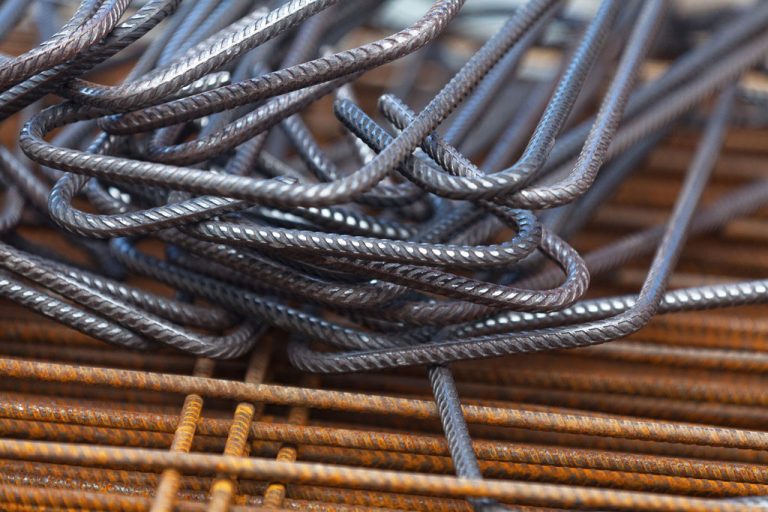
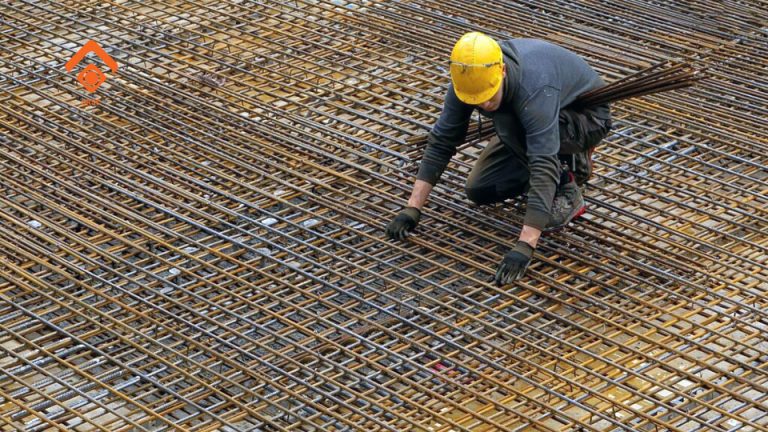
South Rouhina Steel Complex – Rebar is one of the most essential materials used in the construction industry, playing a vital role in increasing the tensile strength of concrete. Concrete is naturally strong under compression but performs poorly under tension. For this reason, reinforcing steel bars are used to strengthen concrete structures.
Based on various standards, particularly the Iranian National Standard, which draws on the Russian GOST standard system, reinforcing bars are classified into several grades. The most common types are A1, A2, A3, and A4.
This article focuses on the differences between A2, A3, and A4 rebar in terms of mechanical properties, appearance, applications, advantages, and disadvantages. In Iran, reinforcing bars are classified in accordance with ISIRI 3132.
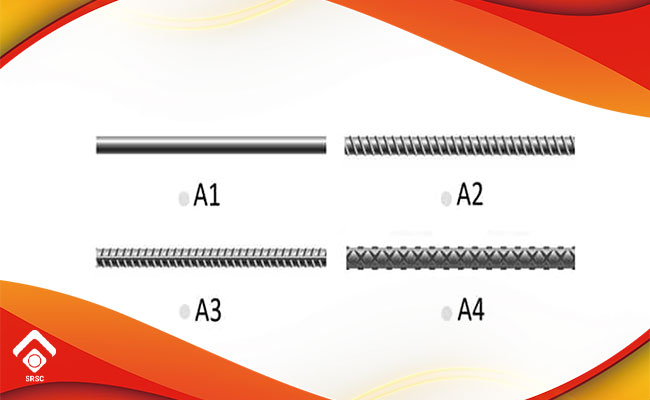
A2 Rebar
A2 rebar is classified as a medium-strength reinforcing bar. It features a spiral or helical rib pattern and offers greater strength than A1 rebar.
The main specifications of A2 rebar are as follows:
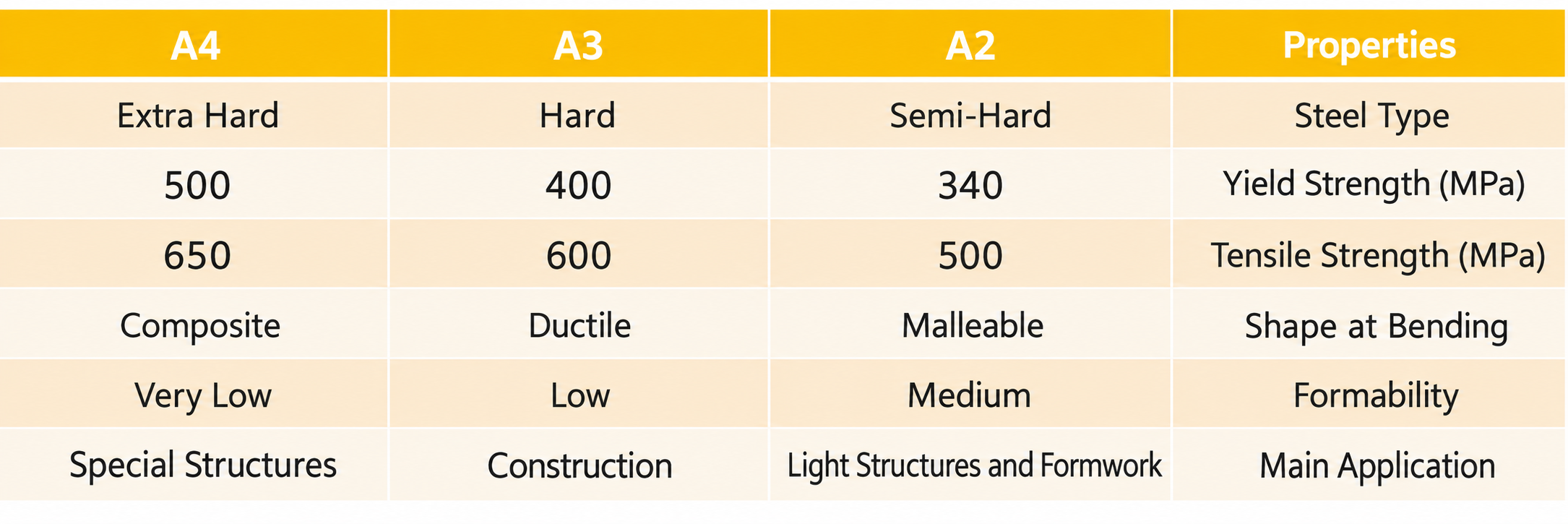
- Yield strength: Minimum 340 MPa
- Tensile strength: Minimum 500 MPa
- Elongation: Minimum 19%
A2 rebar offers good ductility and can withstand a certain degree of bending. However, bending operations must be performed carefully to prevent cracking.
This type of rebar is commonly used for stirrups, lightweight structures, joists, secondary structural components, and applications requiring a moderate level of ductility.
Advantages of A2 Rebar
- Good flexibility and ductility
- Moderate cost
- Suitable for limited bending operations
Disadvantages of A2 Rebar
- Lower strength compared with A3 and A4 rebar
- Generally unsuitable for primary load-bearing structural members where higher-strength reinforcement is required
A3 Rebar
A3 rebar is one of the most widely used types of reinforcing steel in the construction industry. It features a diagonal, herringbone-shaped rib pattern and is classified as a high-strength reinforcing bar.
Its main specifications are as follows:
- Yield strength: Minimum 400 MPa
- Tensile strength: Minimum 600 MPa
- Elongation: Minimum 14%
A3 rebar offers higher strength than A2 rebar but has lower ductility. It is generally unsuitable for extensive bending, and welding is not recommended unless the material’s weldability and the applicable technical requirements have been verified.
A3 rebar is commonly used in columns, beams, foundations, and other primary components of reinforced concrete structures.
Advantages of A3 Rebar
- High tensile and yield strength
- Good bond with concrete
- Wide application in reinforced concrete structures
Disadvantages of A3 Rebar
- Lower ductility and greater susceptibility to brittle behavior compared with A2 rebar
- More limited bending and welding capabilities compared with A2 rebar
A4 Rebar
A4 rebar is one of the high-strength reinforcing steel grades used in Iran. It is manufactured from high-strength steel and typically features composite or spindle-shaped ribs.
Its main specifications are as follows:
- Yield strength: Minimum 500 MPa
- Tensile strength: Minimum 650 MPa
- Elongation: Minimum 12%
A4 rebar offers very high strength and can reduce the amount of steel required compared with lower-strength grades when structural design permits. This can help reduce the overall weight of a structure and lower material consumption.
A4 rebar is used in high-rise buildings, bridges, heavily loaded structures, and specialized industrial and infrastructure projects. However, its use requires careful consideration of structural design and construction requirements.
Advantages of A4 Rebar
- Very high strength
- Potential reduction in the overall weight of a structure
- Potential cost savings in large-scale construction projects through reduced steel consumption
Disadvantages of A4 Rebar
- Higher initial cost in some markets
- Lower elongation compared with A2 and A3 rebar
- Greater need for precise structural design and proper construction practices
Comparison Table: A2 vs. A3 vs. A4 Rebar
Important Factors When Selecting Rebar
The selection of reinforcing steel should be based on several key factors, including:
- Type of structure: Residential buildings, industrial facilities, bridges, or high-rise buildings
- Load requirements: The magnitude and nature of the loads acting on the structure
- Seismic conditions: The earthquake risk and applicable seismic design requirements
- Building codes: Compliance with relevant standards and structural design regulations
- Cost-effectiveness: The total cost of materials, fabrication, transportation, and installation
In earthquake-prone regions, both strength and ductility are essential. A3 rebar is commonly used in reinforced concrete construction when specified by the structural design, while A4 rebar can offer advantages in advanced engineering projects where its higher strength is appropriate and all design requirements are satisfied.
Conclusion
A2, A3, and A4 rebar grades each have distinct mechanical properties and applications. A2 rebar offers good ductility and is commonly used for secondary structural components. A3 rebar is widely used in reinforced concrete structures, providing a practical balance between strength and cost. A4 rebar offers very high strength and can be an effective choice for large-scale and specialized projects, provided that the design and construction requirements are carefully addressed.
Understanding the differences between these grades helps engineers, contractors, and construction professionals select the appropriate reinforcing steel to improve structural safety, durability, and cost efficiency.