South Rouhina Steel Complex – In the advanced automotive industry, the names of standards are constantly encountered. Major references such as German DIN, European EN, American SAE, and international ASTM standards all play a central role in defining the specifications of alloy steels. These standards serve as essential frameworks, ensuring that raw materials have specified chemical compositions and fundamental mechanical properties.
Many engineers, particularly during the initial stages of material selection, assume that if a steel grade is certified according to international standards, the final component manufactured from that steel will necessarily perform without problems under the expected operating conditions.
However, extensive experience in materials engineering and the production of critical automotive components shows that standards are only the starting point of the quality and performance assurance process, rather than a guarantee of final performance.
In real-world automotive manufacturing and service environments, the complexities of manufacturing processes, heat treatment, and dynamic loading conditions require knowledge that goes beyond the general and standardized specifications contained in a standard document. Ignoring the knowledge gap between standards and real-world applications is one of the major causes of costly and unpredictable failures in critical automotive components.
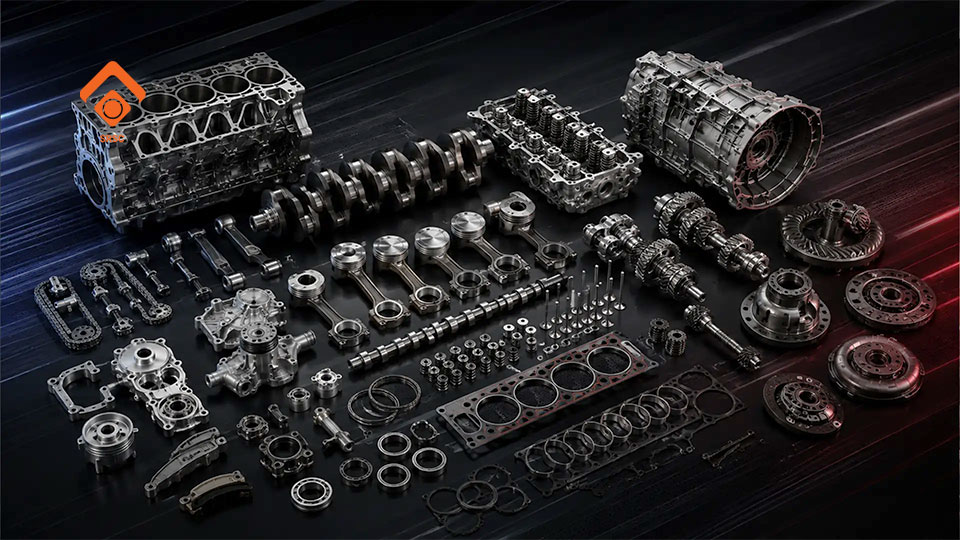
Limitations of Standard Definitions
Alloy steel standards, which are generally defined based on chemical composition and macroscopic properties of raw materials in their initial delivery condition, cover a specific set of parameters. These typically include:
- Chemical Composition Limits:
Standards specify the permissible weight ranges for major elements such as carbon, silicon, and manganese, as well as alloying elements such as nickel, chromium, molybdenum, and vanadium. - Mechanical Property Ranges:
These properties are generally measured under specified delivery conditions, such as normalized or initially quenched and tempered conditions. They include minimum values for tensile strength (σu), yield strength (σy), and elongation (δ). - General Delivery Conditions:
Standards specify the condition of the material at the time of delivery to the customer, such as hot-rolled, annealed, or preliminarily heat-treated (QT) conditions.
The Knowledge Gap in Standards
The critical point is that standards generally do not address many details that directly affect the performance of a component in service. These include:
- Specific Component Application and Actual Stress Conditions:
Is the component subjected to cyclic fatigue loading, impact, creep, or continuous wear? Standards do not model these specific loading scenarios. - Manufacturing Process:
The component’s manufacturing route—whether hot forging, cold forging, or precision machining—has a profound effect on grain orientation, impurity distribution, and the formation of residual stresses, all of which are critical to the final properties of the component. - Final Heat Treatment:
One of the most significant gaps in standards is the lack of a precise definition of the final heat-treatment profile. Hardness, hardening depth, optimized microstructure—such as the percentage of retained martensite—and residual stress distribution all depend on furnace profiles, cooling rates, and tempering temperatures. These factors extend beyond the specifications of the basic standardized steel grade.
This knowledge gap between the specifications of the raw material and the performance requirements of the final component is often responsible for premature failures in shafts, crankshafts, pins, and other dynamic automotive components.
The Same Standard, Different Performance: Hidden Microstructural Differences
In the real world, it is possible for the same steel grade produced by two different steel manufacturers to fully comply with the same standard—for example, a specific chromium-molybdenum steel grade—yet produce completely different results when used in the same manufacturing process for the same component. This apparent contradiction is caused by hidden variables that are not fully covered by the standard.
- Subtle Differences in Chemical Composition: A standard defines an allowable range for each element. For example, carbon may be specified within a range of 0.38% to 0.43%. However, the difference between 0.39% and 0.42% carbon can result in significant differences in surface hardness and resistance to temper embrittlement after quenching and tempering. Similarly, phosphorus and sulfur, even when present within the permitted limits, can affect cold-forging performance and the formation of microcracks caused by stresses following heat treatment.
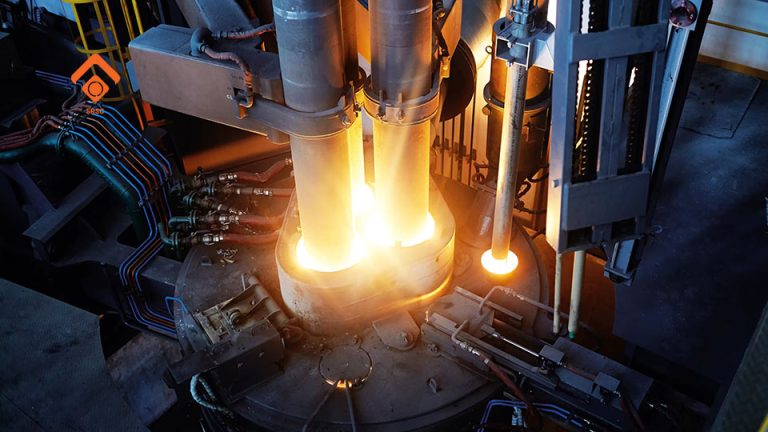
- Melt Cleanliness and Inclusion Uniformity: The quality of the melting process—for example, the use of EAF combined with VOD/VD—and the level of inclusions and dissolved gases in the steel directly affect fatigue performance. Two heats with essentially identical chemical compositions may exhibit different fatigue lives because of differences in the concentration, morphology, and distribution of inclusions, such as aluminates versus silicates. Standards generally specify only minimum overall cleanliness requirements.
- As-Delivered Microstructure: Differences in the cooling rate after hot rolling or in the initial annealing conditions between two suppliers can alter the grain structure. This initial microstructure affects carbon absorption during hardening and the hardenability of the steel. Fine-grained steel may achieve higher hardness during quenching and exhibit better resistance to distortion, while another steel may be more susceptible to cracking—even though both are chemically compliant with the same standard.
Why Understanding the Component Is More Important Than Simply Following the Standard
In applied automotive materials engineering, the philosophy of material selection should shift from “available standard steel” to “steel suitable for the component’s performance requirements.”
This change requires a deep understanding of the component’s entire life cycle.
1. Detailed Loading Analysis
The manufacturer should determine:
- Type of loading: Is the component subjected to axial, shear, torsional, or combined loading?
- Load intensity: What are the maximum peak stresses?
- Service life: How many fatigue cycles must the component withstand?
2. Target Microstructure and Hardness Requirements
Standards may specify hardness in the delivery condition, but the final component requires a specific hardness profile.
- Core Hardness: To prevent ductile failure, the core hardness may need to remain within a specific range. For example, transmission shafts may require a core hardness of approximately 40–45 HRC.
- Case Depth: For wear-resistant components such as gears, the depth of the hardened layer must be precisely controlled. If the hardening depth is insufficient because of inadequate carbon penetration or inappropriate quenching temperatures, premature failure may occur.
3. Process–Material Interaction
Alloy steel must be selected according to the manufacturing process.
- Forging: If the component is to be forged, the steel must have adequate hot workability. Its strength-to-hardenability balance must also be compatible with the forging process and required cross-sectional reduction, allowing proper material flow while preventing cracking.
- Final Heat Treatment: Furnace conditions and tempering temperatures must be selected to achieve an optimized microstructure, such as an appropriate combination of ferrite, fine pearlite, or tempered martensite, capable of providing high toughness and crack resistance.
The result is clear: ignoring this deeper understanding can lead to component failure and significant financial losses.
Using a “standard” steel for a specific application is similar to prescribing a general-purpose medication for a specific medical condition. It may work for some cases, but for many others it may be ineffective or lead to undesirable consequences.
Why Are Successful Alloy Steel Producers Limited?
Producing high-quality and reliable alloy steels for the automotive industry requires much more than access to raw materials and advanced melting furnaces. It is a field that combines science, engineering, and practical experience.
1. Advanced Metallurgical Knowledge
A successful producer must not only understand what alloying elements do, but also understand their behavior throughout complex thermomechanical processes.
For example, understanding the differences between the effects of tungsten (W) and molybdenum (Mo) on carbide stability at elevated tempering temperatures is essential.
2. Understanding Heat-Treatment Behavior and Hardenability Modeling
Leading producers use numerical modeling to predict final hardness in complex geometries. These approaches may include Jominy hardenability curves or thermodynamic software-based models.
Manufacturers without such tools may be forced to rely on trial-and-error approaches, resulting in batch-to-batch variations and reduced consistency.
3. Experience with Real-World Failures
Many new alloy steel producers may possess strong theoretical knowledge but lack an empirical database showing which specific chemical compositions have failed under particular heat-treatment conditions and fatigue mechanisms.
Practical experience enables manufacturers to prevent the recurrence of similar problems at their customers’ facilities.
This is why many companies that enter the alloy steel market based solely on modern equipment may eventually face declining quality or commercial difficulties.
The Hidden Costs of Material Failure
In conventional carbon steels, if the raw material has a defect, the problem is often detected during the early stages of production, such as machining or welding, and the cost of correction is relatively low.
However, in automotive alloy steels, the cost of material failure can be extremely high.
1. Component Failure During Service
Failure of a critical component, such as a connecting pin or transmission gear, can result in accidents, personal injury, or complete vehicle downtime.
The costs associated with recalls, legal claims, and compensation can be enormous.
2. Production Line Stoppage
If a poor-quality steel batch causes repeated failures at a critical production station, even several hours or days of production-line downtime can generate overhead costs and lost production capacity many times greater than the original cost of the raw material.
3. Damage to Brand Reputation
Tier 1 suppliers and OEMs are extremely sensitive to the consistency and reliability of raw-material quality.
A single failure caused by a metallurgical defect can place an entire supply chain under strict scrutiny for months and may ultimately result in the supplier being removed from the approved supplier list.
Because alloy steels undergo complex processes to achieve their final properties, the cost of material failure is significantly higher than that associated with conventional structural steels.
Conclusion
Alloy steel standards such as DIN, SAE, and EN provide a set of essential requirements for defining raw materials in their delivery condition. However, these requirements alone are by no means sufficient to guarantee component performance under the demanding operating conditions of the automotive industry.
Successful automotive component manufacturing using alloy steels requires a comprehensive approach in which:
- Standards are accepted as the initial reference point.
- A deep understanding of the component and analysis of actual stresses serve as the primary filters for material selection.
- Precise control of heat treatment is used as a key variable to achieve the target microstructure and hardness.
- Real-world industrial experience is applied to avoid hidden metallurgical risks.
The fundamental difference between steel that is merely “compliant with the standard on paper” and steel that “performs effectively in real industrial applications” lies in this comprehensive and systemic approach to the entire engineering process—not simply in the initial chemical specifications of the material.
Author and Designer: Mojtaba Mousavi