South Rouhina Steel Complex – The Electric Arc Furnace (EAF) is one of the most important pieces of equipment in modern steelmaking. Over recent decades, this technology has gained a prominent position in steel production facilities worldwide. By using electrical energy to directly melt steel scrap or direct reduced iron (DRI), EAF technology enables the production of high-quality steel, reduces reliance on fossil fuels, and provides greater flexibility in production.
Today, many countries are expanding their use of electric arc furnaces to reduce environmental impacts, improve productivity, and manage raw materials more efficiently. This article explores the structure, operating principles, types, advantages, and applications of electric arc furnaces in the steel industry.
Structure and Operating Principles of an Electric Arc Furnace
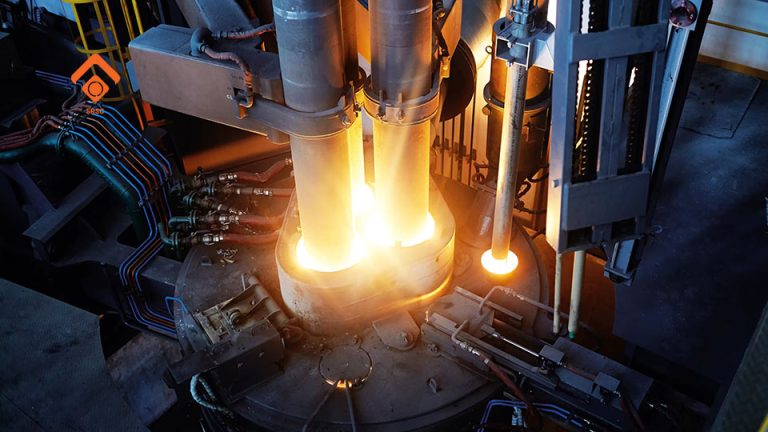
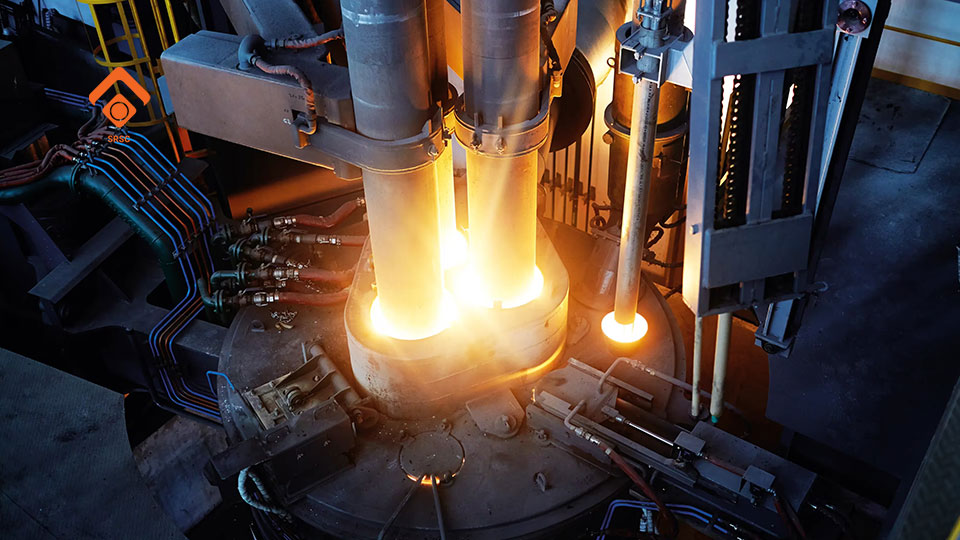
An electric arc furnace consists of a refractory-lined chamber in which graphite electrodes generate an electric arc. When the electrodes are brought close to the charge inside the furnace, a high potential difference creates an electric arc that can produce temperatures ranging from 1,500°C to 3,500°C. These extremely high temperatures enable the rapid melting of various ferrous metals, particularly steel scrap.
The main components of an electric arc furnace include:
- Steel Shell and Refractory Lining: The furnace shell is generally cylindrical and lined with refractory materials to withstand extreme temperatures.
- Graphite Electrodes: These electrodes generate the electric arc. They are consumable components that gradually shorten during the melting process.
- Furnace Roof and Tilting System: The roof accommodates the electrodes and helps minimize heat loss. The tilting mechanism allows molten steel to be discharged efficiently.
- Cooling System: Due to the extremely high operating temperatures, the furnace shell and roof are typically protected by water-cooled panels or other cooling systems.
The operating principle of an electric arc furnace is straightforward: electrical energy is converted into an electric arc, which generates the heat required to melt the charge. Precise control over temperature and melting time helps ensure consistent steel quality.
Raw Materials Used in Electric Arc Furnaces
Steel scrap is the primary raw material used in electric arc furnaces. This production method can significantly reduce the steel industry’s dependence on iron ore and increase the importance of recycling.
In addition to scrap, direct reduced iron (DRI) and hot briquetted iron (HBI) are used to help control the chemical composition and quality of the steel. Other materials, including lime, dolomite, and ferroalloys, may be added during melting and refining to adjust the properties of the final product.
Stages of Steel Production in an Electric Arc Furnace
The steelmaking process in an EAF typically involves the following stages:
- Charging the Raw Materials: Steel scrap or direct reduced iron is mechanically charged into the furnace. The quantity and composition of the raw materials directly influence the quality of the final steel.
- Melting Through the Electric Arc: The electrodes are lowered to establish the electric arc. Most of the solid charge melts during this stage, forming a pool of molten metal.
- Refining and Oxidation: Undesirable elements and impurities, including phosphorus and sulfur, are reduced to the required levels. Oxygen injection and the addition of slag-forming materials play important roles in this process.
- Homogenization and Chemical Composition Adjustment: Ferroalloys and other additives are introduced to achieve the required chemical composition and control the final mechanical properties of the steel.
- Tapping and Casting: Once the desired composition and temperature have been achieved, the molten steel is tapped into a ladle and prepared for continuous casting or other casting processes.
Types of Electric Arc Furnaces
Electric arc furnaces are available in several types, depending on their design and intended application.
1. AC Electric Arc Furnaces
Alternating-current (AC) electric arc furnaces are the most widely used type of EAF worldwide. They typically feature three graphite electrodes and are widely adopted in industrial steelmaking. Their established technology makes them a common choice for steel production.
2. DC Electric Arc Furnaces
Direct-current (DC) electric arc furnaces generally use a single graphite electrode in combination with a conductive bottom electrode. They can offer more stable arc operation and lower electrode consumption under suitable operating conditions. However, their initial investment and equipment costs may be higher.
3. Small Laboratory and Specialized Electric Arc Furnaces
These furnaces are designed for small-scale applications, including research, the production of specialized alloys, and precision industrial processes. Their capacity and configuration depend on the specific requirements of each application.
Advantages of Electric Arc Furnaces Compared with Blast Furnaces
Traditionally, the steel industry has relied heavily on blast furnaces combined with basic oxygen furnaces (BOFs). However, the growing emphasis on cleaner energy, lower emissions, and improved resource efficiency has increased the popularity of EAF technology.
The main advantages of electric arc furnaces include:
- Reduced Dependence on Fossil Fuels: EAFs use electricity as their primary energy source for melting, reducing direct reliance on coke and other fossil fuels used in conventional ironmaking routes. The overall environmental benefit depends partly on the electricity source.
- Ability to Use Steel Scrap: Recycling steel can reduce the demand for virgin raw materials and support more sustainable resource management.
- Production Flexibility: EAFs are available in different capacities and can be adapted to produce various steel grades, including specialized and alloy steels.
- Shorter Melting Cycles: Electric arc furnaces can melt their charge relatively quickly, depending on furnace design, operating conditions, and raw material quality.
- Precise Control of Chemical Composition: With appropriate refining and process control, EAFs can produce high-quality steels with carefully controlled chemical compositions, including alloy steels.
Challenges and Limitations of Electric Arc Furnaces
Despite their advantages, electric arc furnaces also present certain operational challenges:
- Raw Material Quality: Scrap quality must be carefully controlled. Contaminated scrap can introduce unwanted elements and negatively affect the properties of the final steel.
- High Electricity Demand: EAF operation requires substantial electrical power, making reliable electricity supply and energy cost management essential.
- Graphite Electrode Costs: Graphite electrodes are expensive consumables, and their consumption can represent a significant operating cost.
Nevertheless, technological advances in furnace design, process automation, energy management, and refining techniques have helped address many of these challenges.
The Role of Electric Arc Furnaces in the Future of the Steel Industry
Growing global attention to renewable energy, carbon emission reduction, and the responsible use of natural resources has strengthened the role of electric arc furnaces in the future of steelmaking. Many countries are expanding EAF-based production as part of their efforts to modernize the steel industry and reduce its environmental footprint.
The increasing use of direct reduced iron alongside steel scrap can help manufacturers control raw material composition and produce high-quality steel. However, the overall environmental performance of EAF steelmaking depends on several factors, including the electricity mix, the raw materials used, and the efficiency of the production process.
Research into high-efficiency electrodes, intelligent energy control, and optimized slag formation is also helping improve furnace performance and reduce operating costs.
Electric arc furnace technology is therefore expected to remain an important part of the transition toward more efficient and sustainable steel production in the coming decades.